










Highlights
- Key takeaways
- What is the refrigerant transition, and why is it happening now?
- What does the R-410A refrigerant transition mean for multi-site facility portfolios?
- Beyond refrigerant costs, what else makes aging R-410A equipment a liability?
- How should facility teams communicate the refrigerant transition to CFOs?
- How can organizations turn refrigerant compliance into a performance opportunity?
- The refrigerant transition is a capital planning decision, not a compliance checkbox
Replacing aging R-410A equipment is no longer a question of if, but when and how. The organizations getting ahead of it are treating the refrigerant transition as a planned capital investment rather than a series of emergency repairs.
Key takeaways
- R-410A is a high-global-warming-potential refrigerant used in most U.S. commercial and industrial HVAC equipment for the past two decades.
- The federal AIM Act prohibited the manufacture and import of new R-410A equipment starting January 1, 2025.
- A May 2026 EPA final rule removed the prior installation deadline, allowing remaining pre-2025 inventory to be installed until supplies are depleted.
- Multi-site facility portfolios face compounding financial exposure as refrigerant prices increase and the efficiency gap between legacy R-410A units and new equipment widens.
- Organizations that treat this transition as a coordinated capital program rather than a site-by-site compliance task capture measurably better outcomes on cost, efficiency, and capital structure.
What is the refrigerant transition, and why is it happening now?
The refrigerant transition is the federally mandated phasedown of high-global-warming-potential (GWP) refrigerants like R-410A in favor of lower-GWP alternatives such as R-32 and R-454B. The driver is the American Innovation and Manufacturing (AIM) Act of 2020, which directs the EPA to cut hydrofluorocarbon (HFC) production and consumption 85% by 2036.
As of January 1, 2025, U.S. manufacturers can no longer produce or import new HVAC equipment that uses R-410A. Existing inventory can be installed until supplies run out.
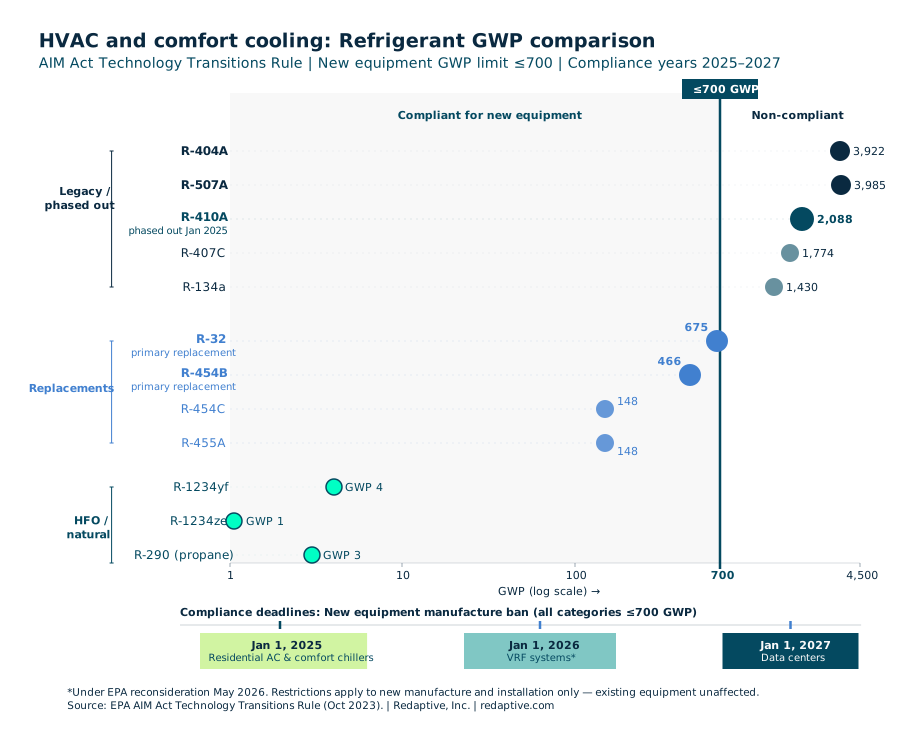
Refrigerant transition planning for HVAC and comfort equipment
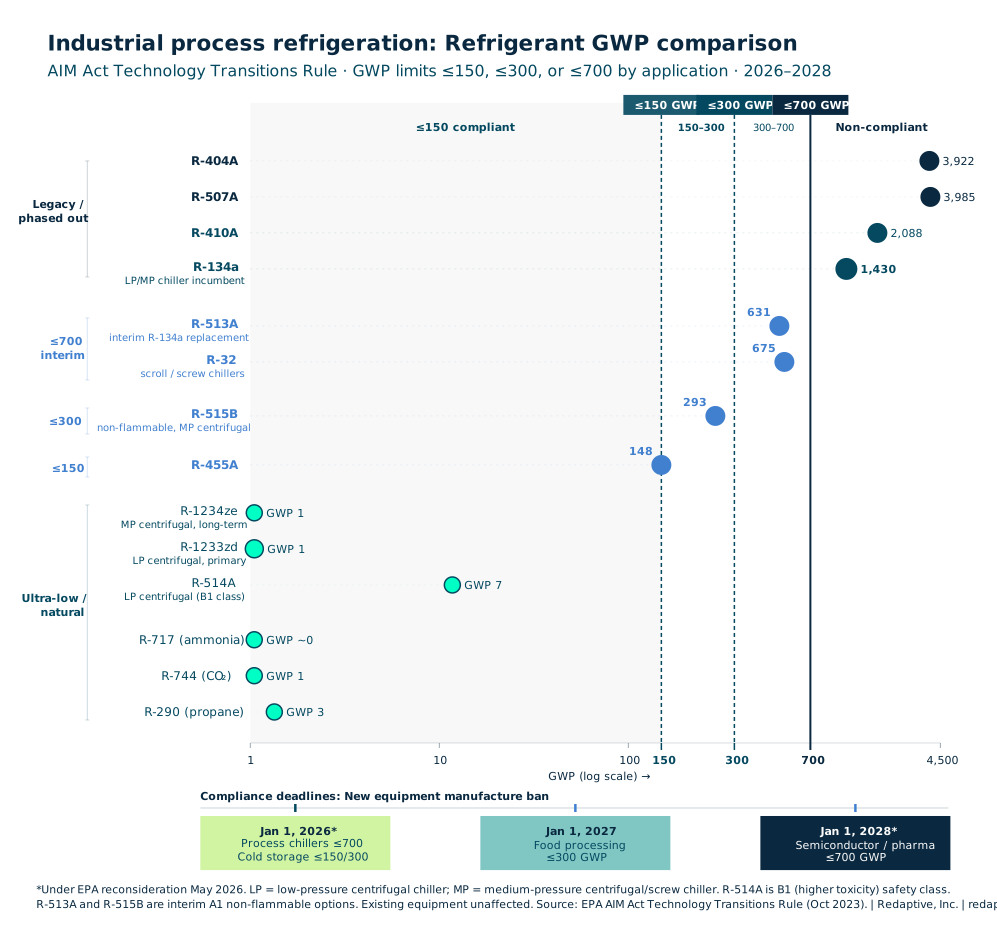
Refrigerant transition planning for industrial process equipment
What does the R-410A refrigerant transition mean for multi-site facility portfolios?
R-410A equipment installed before 2025 is still legal to operate, but every legacy unit now sits on a finite service runway, and the cost of managing it is rising.
According to a 2026 Rocky Mountain Institute (RMI) report, demand for R-410A could outpace the maximum annual supply by 2029 as production cuts deepen during the phasedown. Europe’s phasedown offers a preview of what that supply-demand gap means in practice: R-410A prices rose between 2.4 and 11.7 times 2014 baseline levels, depending on where buyers sat in the supply chain, according to a 2024 EU refrigerant price monitoring report. The U.S. phasedown of R-22 under the Clean Air Act tells a similar story, with R-22 prices rising as much as 10-fold after the production ban took effect. Facility portfolios that delay planning face a similar, and now compounded, risk.
The EPA’s May 2026 final rule removed installation deadlines for pre-2025 R-410A residential and light-commercial inventory, increasing market demand for R-410A at the same time the AIM Act supply cap continues to tighten. Industry groups estimate that effect alone could add $8 billion or more in refrigerant costs across the HVACR sector.
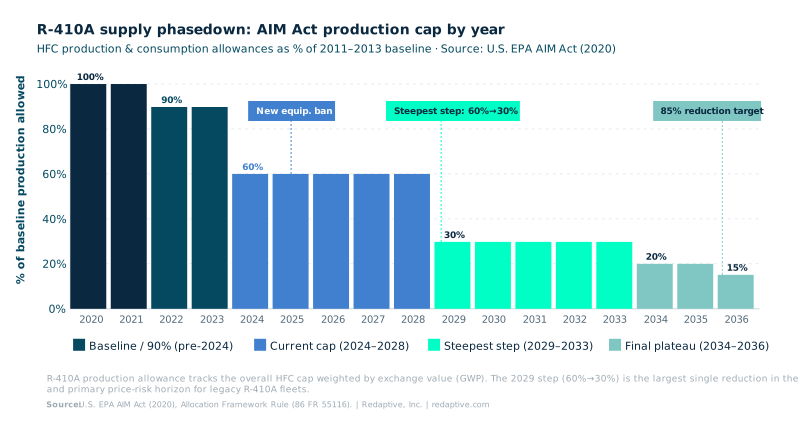
R-410A supply phasedown
Beyond refrigerant costs, what else makes aging R-410A equipment a liability?
Older R-410A equipment typically operates at lower efficiency ratings than new, lower-GWP systems, a gap that translates directly to energy spend across every site still running legacy units. The U.S. Department of Energy’s Better Buildings program estimates that upgrading older commercial rooftop units alone can reduce HVAC energy use by 30–50%.
The decision to replace existing R-410A equipment depends on factors such as the unit’s remaining service life, any history of refrigerant leaks, and how long the organization plans to retain the facility in its portfolio. Units with a history of repeated leaks or limited remaining life in long-hold assets warrant earlier replacement. Facilities approaching a lease exit or nearing the end of their operational use may not.
How should facility teams communicate the refrigerant transition to CFOs?
CFOs and finance leaders need to understand the financial risk of inaction, the capital profile of action, and the operational return on modernization. Three framings that land:
- Exposure is compounding. R-410A refrigerant costs are rising, units are aging into their highest-failure window, and emergency replacement costs significantly more than planned replacement.
- Efficiency brings operational savings. New equipment achieves materially higher efficiency ratings than the units it replaces, reducing HVAC energy spend and reactive maintenance costs on old equipment.
- Replacement doesn’t have to mean CapEx. Energy-as-a-service (EaaS) models let organizations modernize HVAC systems without competing for capital budget. The project is structured as a service fee rather than debt, keeping it off the balance sheet and out of competition with other capital priorities.
How can organizations turn refrigerant compliance into a performance opportunity?
The organizations capturing the most value from this refrigerant transition treat it as a coordinated capital program rather than a sequence of unrelated equipment failures. That shift produces advantages that site-by-site execution does not, including:
Procurement leverage
Bulk equipment orders priced against a multi-year plan secure better unit pricing, faster lead times, and committed installation capacity than one-off emergency purchases. As demand for next-generation refrigerant equipment rises through the late 2020s, that leverage will matter more, not less.
Standardized specifications
A portfolio plan lets facility teams update facility specs once for new equipment, leak detection, ventilation, and clearance requirements, then apply those specs across every replacement. Without this, each facility becomes a one-off design exercise.
Predictable capital planning
A multi-year replacement schedule produces a known annual spend that finance can model, fund, and stage. Reactive replacement incurs unpredictable lump-sum costs at the worst times in operations, typically when units fail during peak seasonal load.
Minimal service disruption
Critical operations keep running throughout the program. HVAC upgrades are completed during scheduled maintenance windows, eliminating unplanned downtime.
Aggregated savings reporting
Tracking energy consumption, refrigerant charge, and maintenance hours across upgraded units produces verified savings data that supports both internal capital reviews and external sustainability disclosures.
Single funding structure
Funding replacements through one EaaS agreement is operationally cleaner than negotiating capital approvals across dozens of facilities over five years. Organizations pay through operational savings and structure the agreement as a service fee rather than debt or capital expenditure, keeping the program off the balance sheet entirely.
The refrigerant transition is a capital planning decision, not a compliance checkbox
The R-410A phasedown is the operating reality for every multi-site facility portfolio in the country. Organizations that treat it as a one-off compliance cost will absorb rising service refrigerant prices, reactive replacement premiums, and missed efficiency gains.
But organizations that treat the refrigerant transition as a multi-year modernization plan will lock in savings and procurement advantages while staying ahead of the regulations and rising costs.
Request a portfolio-wide HVAC assessment to identify which facilities to modernize first, and how to fund the project without upfront capital investment.
Primary sources
- Background on HFCs and the AIM Act. U.S. Environmental Protection Agency.
- Clearing the Air on Reclaimed Refrigerant. Rocky Mountain Institute.
- Monitoring of Refrigerant Prices Against the Background of Regulation (EU). European Commission.
- Phasing Out HCFC Refrigerants to Protect the Ozone Layer. U.S. Environmental Protection Agency.
- Regulatory Actions for Technology Transitions. U.S. Environmental Protection Agency.
- HARDI Opposes EPA Changes to Technology Transitions Rule as Costly Mistake for HVACR Industry. HARDI.
- Upgrade Your RTUs and Reduce Energy Use by 30 to 50%. U.S. Department of Energy.