








Highlights
- Energy volatility is changing the operating environment
- The economics of energy are shifting faster than many planning models assume
- The modernization backlog problem
- A shift toward portfolio-level energy modernization
- Building an energy resilience strategy
- What this looks like in practice
- A better way forward
Energy is no longer just a line item to manage. In energy-intensive environments, volatility and reliability risk are now showing up as margin pressure, forecast risk, and continuity exposure. That is why energy is moving onto the executive agenda.
For most industrial organizations, energy has historically been treated as a background operating expense.
Facilities teams managed equipment performance. Finance teams tracked budgets and energy spend. Infrastructure upgrades happened gradually as equipment aged or efficiency projects cleared internal capital thresholds.
That model worked when energy markets were relatively stable, grid infrastructure was predictable, and operational disruption was less visible.
But the conditions surrounding energy infrastructure are changing.
Demand is rising faster than historical norms. The generation mix is becoming more variable. Utility rates are increasingly difficult to forecast. And the operational consequences of disruption—from grid instability to equipment failure—are becoming harder to ignore.
As a result, energy is moving out of the facilities department and into the executive agenda. Citi Group even cites energy—not AI— as the strategic variable in the global economy.
Energy volatility is changing the operating environment
Several structural forces are converging at once.
For years, electricity demand in the U.S. was relatively stable. That pattern is changing as data center growth, electrification, and broader industrial demand put new pressure on the system. At the same time, the resource mix is shifting toward more variable generation while dispatchable baseload resources continue to retire.
The result is a more dynamic energy environment—one that is harder to forecast, budget, and plan around.
For energy-intensive organizations, that uncertainty affects both sides of the business: finance feels it through wider budget variance and weaker forecasting confidence, while operations feels it through reliability concerns, continuity risk, and infrastructure strain.
Energy volatility is no longer just a facilities issue. It is becoming a business performance issue.
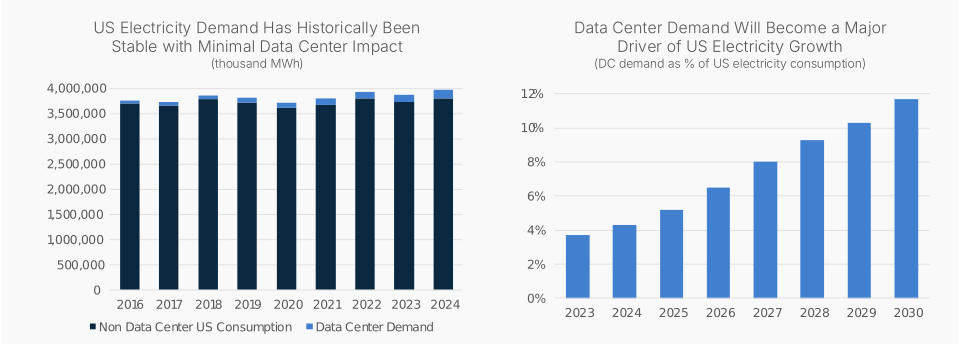
(Click to enlarge)
Sources: EIA, Lawrence Berkeley National Laboratory, Belfer Center, McKinsey
The economics of energy are shifting faster than many planning models assume
The challenge is not just volatility in theory. It is the way volatility is colliding with the economics of operating and modernizing infrastructure.
Industrial energy rates have been rising faster than many companies’ long-term planning assumptions. Standard electricity escalators that may have once felt conservative are now increasingly disconnected from what companies are actually paying. At the same time, utilities across the country continue to seek significant rate increases, adding even more pressure to future energy budgets.
That mismatch is forcing companies to revisit how they plan. A budget model built for gradual change and a capital process built around discrete site projects both struggle when modernization needs become portfolio-wide.
This is one reason CFOs are being pulled into energy conversations more directly.
With requested rate increases almost doubling from 2024 to 2025, energy is no longer just a line item to manage. It is becoming a strategic exposure—one that affects margin, forecast confidence, capital flexibility, and continuity risk.
For many industrial organizations, the issue is no longer simply reducing energy costs. It is reducing variance, improving predictability, and limiting the operational and financial exposure created by a more volatile energy environment.
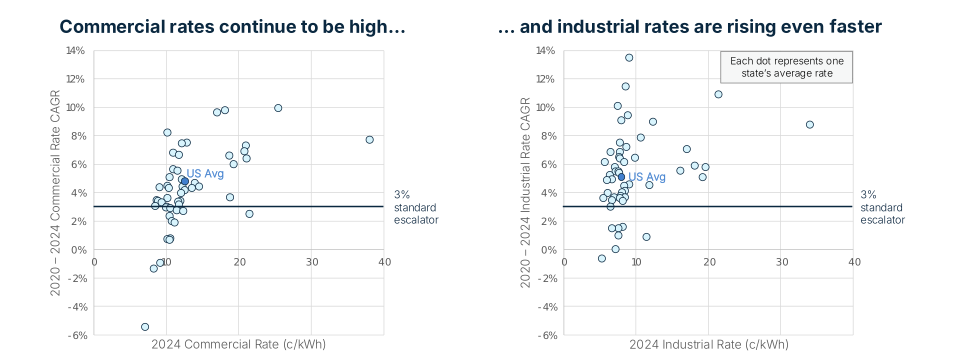
(Click to enlarge)
Source: EEI
The modernization backlog problem
Despite these shifts, many organizations still approach energy and utility upgrades the old way.
Projects are still often prioritized site-by-site. Lighting gets addressed in one facility. HVAC replacement happens somewhere else. Solar or storage gets considered only when capital is available.
Each decision may make sense on its own. But together, they create a modernization backlog.
In a more stable energy environment, this fragmented approach may have been manageable.
What makes the traditional model harder to sustain is not just slower progress. It is the cost of waiting. When modernization moves one project at a time, savings are deferred, project costs continue to rise, and operational exposure persists across aging infrastructure.
Across large portfolios, this delay compounds—turning what should be a modernization plan into a growing backlog of infrastructure upgrades.
A shift toward portfolio-level energy modernization
Forward-looking organizations are beginning to rethink the model.
Instead of evaluating infrastructure upgrades facility-by-facility, many industrial organizations are taking a portfolio view.
A portfolio approach allows leaders to move from reactive upgrades to a more proactive modernization strategy—prioritizing investments based on enterprise value, coordinating improvements across facilities, and capturing savings sooner while reducing exposure to energy volatility and operational risk.
The goal is not simply to complete individual projects—it is to modernize infrastructure in a way that improves performance across the entire portfolio.
More importantly, it opens the door to a more strategic energy posture.
Not just efficiency.
Not just replacement.
But a more resilient energy strategy that combines stronger cost management, greater operational continuity, and a more adaptable infrastructure foundation for the future.
This is where energy modernization becomes more than maintenance.
It becomes a business capability.
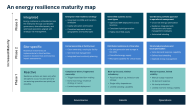
(Click to enlarge)
Source: Verdantix: Roadmap to Energy Resilience
Building an energy resilience strategy
A modern energy strategy can take several forms depending on the footprint, risk profile, and operating model of the business.
For some organizations, the starting point is better energy cost management: modernizing inefficient systems, improving controls, and creating better visibility into how energy is consumed across the portfolio.
For others, the priority is resilience: reducing dependence on the grid through solar, battery storage, or other distributed energy solutions that help facilities maintain operations during disruptions.
For many, the answer is a combination of both.
Smarter building systems can reduce waste, improve operating performance, and create more actionable data. Solar and storage can support grid-independent resilience and long-term cost stability. Portfolio-level planning can help organizations decide where each measure creates the most value.
The common thread is that companies are no longer looking at energy infrastructure solely as a utility obligation.
They are beginning to view it as a strategic lever for resilience, control, and flexibility.
What this looks like in practice
In a food and beverage operation with cold storage, processing, and distribution across multiple sites, energy is tied directly to uptime, refrigeration performance, product integrity, and throughput. A single disruption can ripple far beyond the utility bill into millions of dollars wasted on spoiled products, potential quality control issues, and more.
A portfolio approach changes that equation by helping the organization prioritize upgrades based on operational criticality, energy intensity, and resilience needs—building a more coordinated strategy for reducing exposure across the enterprise.
That is a very different conversation than “How do we reduce next quarter’s utility bill?”
It is a conversation about how energy modernization supports the business itself.
A better way forward
Energy volatility is unlikely to disappear. Rising demand, evolving supply dynamics, aging infrastructure, and upward pressure on rates will continue to shape the operating environment.
But organizations are not stuck reacting to those conditions.
The better path forward is to reduce exposure by modernizing infrastructure and equipment in a way that strengthens resilience, improves predictability, and creates greater flexibility for the business.
This shift opens the door to a more resilient energy strategy—one that combines stronger energy cost management, grid-independent resilience through solar and storage, smarter building systems, and funded modernization models that reduce exposure while preserving capital flexibility.
This is the opportunity Infrastructure Monetization makes possible.
Redaptive helps organizations do more than fund and execute modernization. It acts as a differentiated partner—helping clients shape the right roadmap, advise on capital allocation, and coordinate execution in a way that delivers earlier impact and faster speed to value.
And because the model is flexible, clients can choose the structure that best fits their needs—whether that means Redaptive-provided funding, client capital, or coordination with existing suppliers. The focus is not simply getting projects approved. It is getting systems up and running, reducing exposure, and delivering measurable business outcomes.