








Highlights
- Force #1: Scale Has Outgrown the Site-by-Site Model
- Force #2: Energy Is Now a Bigger Business Variable
- Force #3: Deferred Upgrades Are Becoming Operational Risk
- What These Changes Have in Common: The Limits of Site-Level Execution
- Why the Traditional Model Struggles: How Value Gets Captured Over Time
- The Delay Tax: When Waiting Becomes a Measurable Cost
- The Emerging Portfolio Perspective: From Projects to Portfolio Opportunity
- Conclusion: The Bigger Question Leaders Are Asking
For most industrial organizations, modernizing building and utility infrastructure isn’t a new conversation.
Facilities teams have been upgrading lighting systems, HVAC equipment, refrigeration, compressed air, and controls for decades. These improvements have traditionally been planned and executed one project at a time, often tied to capital cycles or equipment replacement schedules.
In many ways, that approach made sense. Modernization was manageable at the site level, costs were predictable, and operational teams could work projects into existing maintenance plans.
But across the industrial sector, something is starting to shift.
Many of the most forward-thinking organizations we work with are beginning to rethink modernization—not because the goal has changed, but because the environment around it has.
Three forces in particular are reshaping how leaders think about infrastructure across their facilities.
Force #1: Scale Has Outgrown the Site-by-Site Model
For organizations operating large, distributed portfolios, modernization often begins as a series of sensible site-level projects—lighting here, HVAC there, controls somewhere else. But as those needs accumulate across dozens or hundreds of facilities, the site-by-site model starts to strain. Each upgrade requires separate approvals, vendor coordination, and internal oversight, which slows progress and fragments execution across the portfolio.
Over time, modernization becomes less a series of projects than a growing backlog that outpaces what sites can realistically deliver. That is leading many industrial leaders to ask a broader question: what if modernization were managed as a portfolio opportunity rather than a sequence of isolated projects?
Force #2: Energy Is Now a Bigger Business Variable
Energy has always been an operating cost. But in recent years it has become a more complex business variable for many industrial organizations.
Price volatility, regional differences in energy costs, and growing concerns about reliability have made energy exposure more visible to finance and operations leaders.
For some companies, energy is now affecting:
- operating cost forecasts
- production planning
- risk management discussions
- sustainability commitments
This shift is changing how infrastructure decisions are evaluated.
Upgrades that once looked like incremental efficiency projects can now influence cost predictability, operational resilience, and long-term planning.
As a result, infrastructure modernization is starting to show up in more strategic conversations—not just facilities planning.
Force #3: Deferred Upgrades Are Becoming Operational Risk
Industrial organizations are also confronting another reality: the cost of waiting. In the past, it was often reasonable to delay upgrades until the next capital cycle or until equipment reached the end of its expected life. But across many facilities, aging infrastructure and deferred improvements are starting to show up in new ways:
- unexpected equipment failures
- rising maintenance requirements
- operational disruptions
- emergency repairs that cost more than planned upgrades
When those issues appear across multiple facilities, they can become more than isolated maintenance challenges.
They become an operational risk.
This doesn’t mean organizations have suddenly become careless about maintenance. In many cases, the opposite is true: teams are doing everything they can to keep aging systems running while managing competing priorities.
But it does mean that leaders are starting to rethink whether the traditional pace of modernization still makes sense.
What These Changes Have in Common: The Limits of Site-Level Execution
At first glance, these three forces—scale, energy exposure, and operational risk—may seem unrelated.
But they share something important. All three expose the limits of approaching modernization as a series of independent site-level projects. When upgrades are planned and executed one facility at a time:
- progress is slower
- savings and performance improvements arrive later
- operational teams carry more coordination burden
- enterprise-level value is harder to capture
Increasingly, industrial leaders are recognizing that modernization decisions don’t just happen at the site level, they affect the entire portfolio.
That realization is leading some organizations to evaluate infrastructure differently: not as isolated projects, but as a portfolio opportunity.
Why the Traditional Model Struggles: How Value Gets Captured Over Time
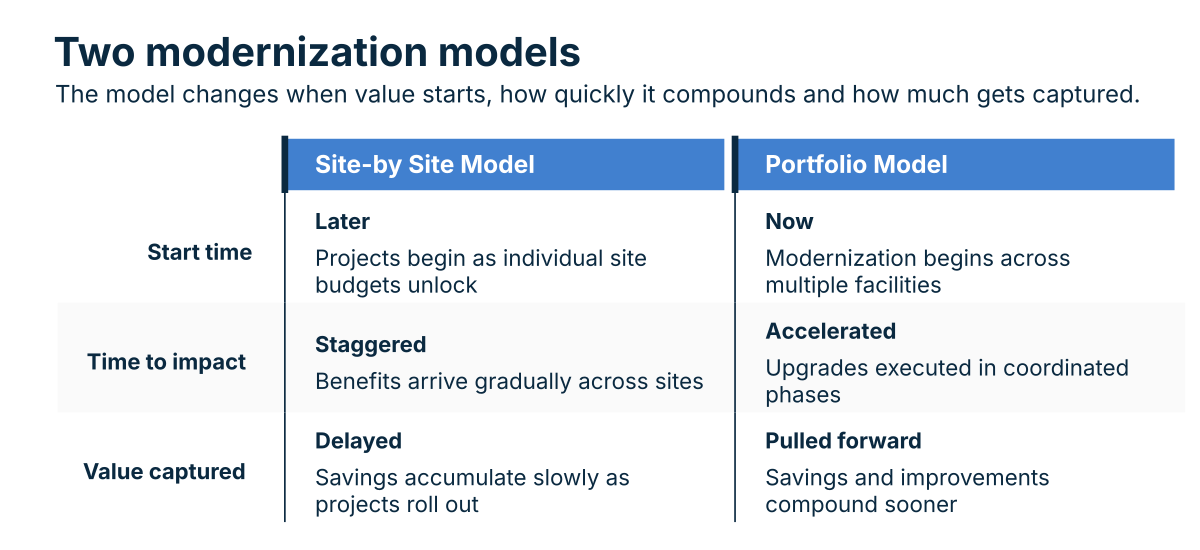
The issue isn’t simply that modernization takes time. It’s how value is captured over time.
When modernization happens one site at a time, progress becomes staggered across the portfolio and benefits arrive slowly. The model changes when value begins, how quickly it compounds, and how much the organization ultimately captures.
The Delay Tax: When Waiting Becomes a Measurable Cost
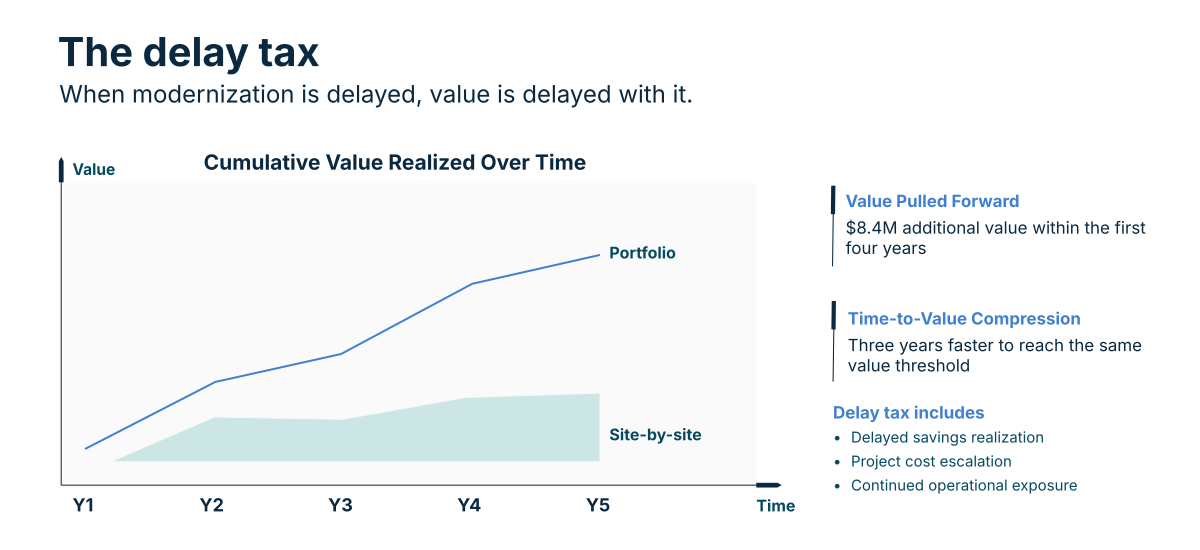
The challenge with site-by-site modernization isn’t just that it moves slowly. Delay has a cost—and that cost compounds across the portfolio.
When modernization stretches across multiple budget cycles, organizations often absorb what can be thought of as a “delay tax.”
For finance leaders, this reframes modernization not simply as a capital decision—but as a timing decision with measurable financial consequences.
The Emerging Portfolio Perspective: From Projects to Portfolio Opportunity
Rather than asking, “Which project should we do next?” some forward-thinking industrial organizations are beginning to ask a broader question:
What opportunities exist across our entire portfolio—and how quickly could we capture them?
Looking at modernization through that lens changes the conversation. Instead of spreading upgrades over many years, organizations can begin evaluating how modernization might be coordinated across multiple facilities, accelerating execution and pulling value forward. Additionally, centralized program management enables economies of scale across procurement, rebates, and specialized labor.
That’s the perspective behind approaches like Infrastructure Monetization, which combine capital, execution, and performance measurement to help organizations modernize infrastructure at portfolio scale.
For companies managing large distributed footprints, that shift from projects to portfolios, is becoming an increasingly important part of how modernization is evaluated.
Conclusion: The Bigger Question Leaders Are Asking
The need to modernize hasn’t changed. Industrial infrastructure will always need to be upgraded, maintained, and replaced over time.
What’s changing is the context around those decisions.
Scale, energy exposure, and operational risk are making modernization a more strategic conversation—one that reaches beyond individual facilities. And for many industrial leaders, the question is no longer whether modernization is necessary. It’s whether the traditional way of executing it is still the best way to capture the opportunity.